Building a Repeatable Vision Test System
A fixed regression dataset and isolated evaluation path made computer-vision changes measurable without touching production camera traffic.
A long-term robotics project exploring autonomous navigation, embedded control, computer vision and AI.
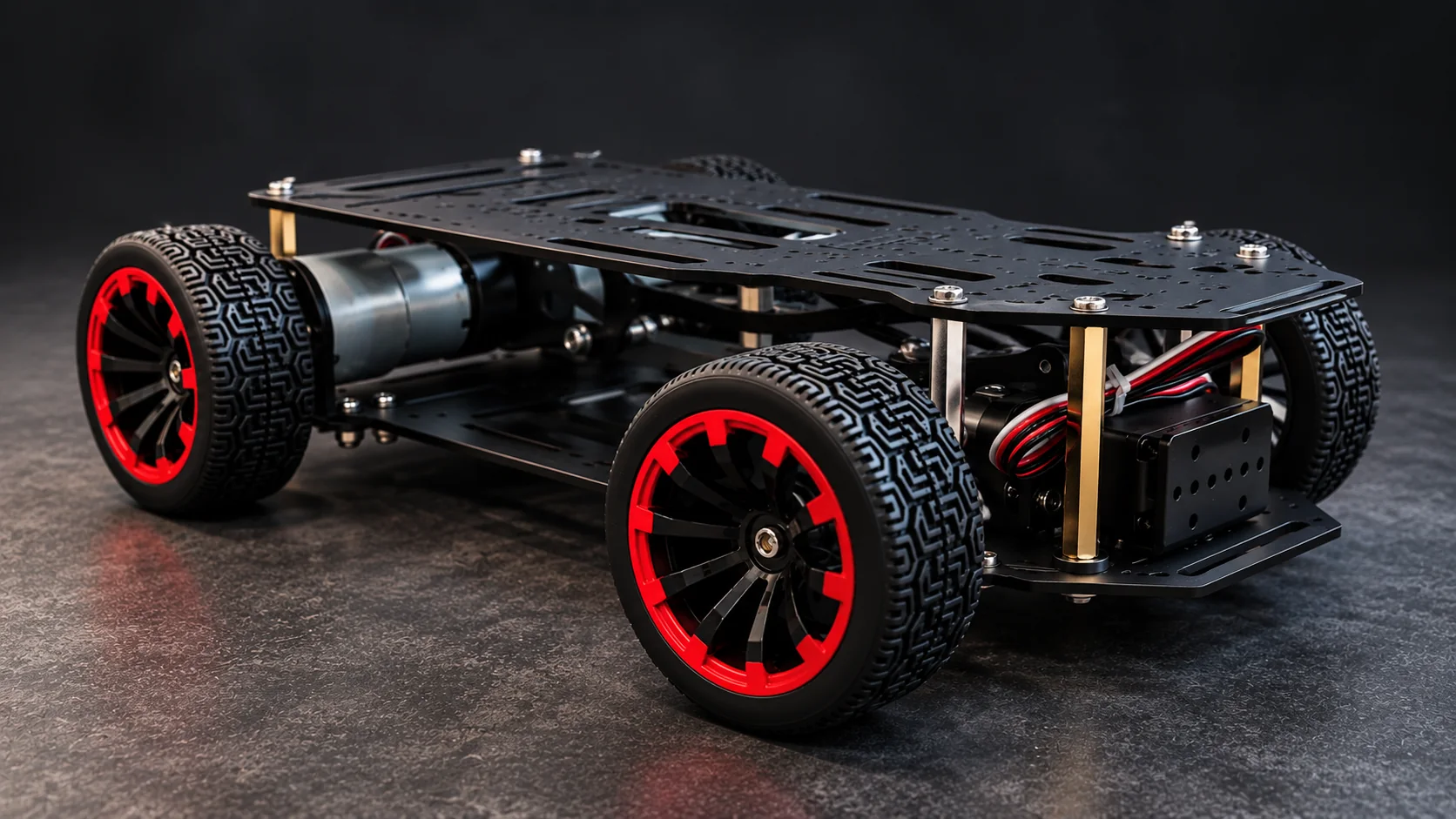
A four-wheel experimental rover built as a layered robotics system: high-level autonomy on Raspberry Pi, deterministic real-time control on STM32, and explicit safety boundaries between them.
Local vision pipeline, event detection and repeatable evaluation.
LiDAR SLAM and Nav2 integration are part of the active development path.
STM32 is the deterministic low-level control and safety authority.
High-level intent is validated before it reaches deterministic real-time control.
Camera-based perception and planned range sensing.
Vision events and high-level AI-assisted interpretation.
Mission Manager validates intent and execution boundaries.
STM32 handles deterministic steering, motors and failsafe behavior.
Capabilities are labelled by their actual project state. Planned work is never presented as operational.
Problems, decisions, tests and lessons from building ARGOS.
A fixed regression dataset and isolated evaluation path made computer-vision changes measurable without touching production camera traffic.
Why high-level intent passes through Mission Manager instead of becoming direct robot control.
How ARGOS separates high-level software from deterministic real-time control while keeping communication observable and bounded.
Ackermann steering, independent rear drive, onboard compute and real-time control form the physical ARGOS platform.