Architecture / System V1
System
Architecture
From high-level intent to deterministic real-time control. ARGOS separates operator and AI intent from the layers that validate, execute and physically control the rover.
Interactive system map
Built as explicit layers.
Select a component to inspect its role, current status and safety responsibility.
01 / Operator & AI
02 / High-Level Control
03 / Perception & Autonomy
04 / Real-Time Control & Hardware
System / Data Flow
Intent travels down. State travels back.
HIGH-LEVELOPERATORWeb / PWA →REASONINGAI Services
DETERMINISTICREAL-TIME AUTHORITYSTM32F4 →PHYSICAL OUTPUTSteering + drivetrain
← TELEMETRY / STATUS / EVENTS RETURN UPSTREAM
Safety by Architecture
Control authority narrows toward hardware.
01 / NO BYPASS
AI cannot drive actuators.
AI operates at the intent layer. Mission Manager remains the execution and validation boundary.
02 / LOCAL AUTHORITY
STM32 owns real-time safety.
Motor control, steering, watchdog and failsafe behavior remain below Linux and network services.
03 / FAIL CLOSED
Commands expire.
Connection loss must not preserve stale motion intent, and reconnect must not replay stale commands.
Physical Architecture
The software boundary meets the machine.
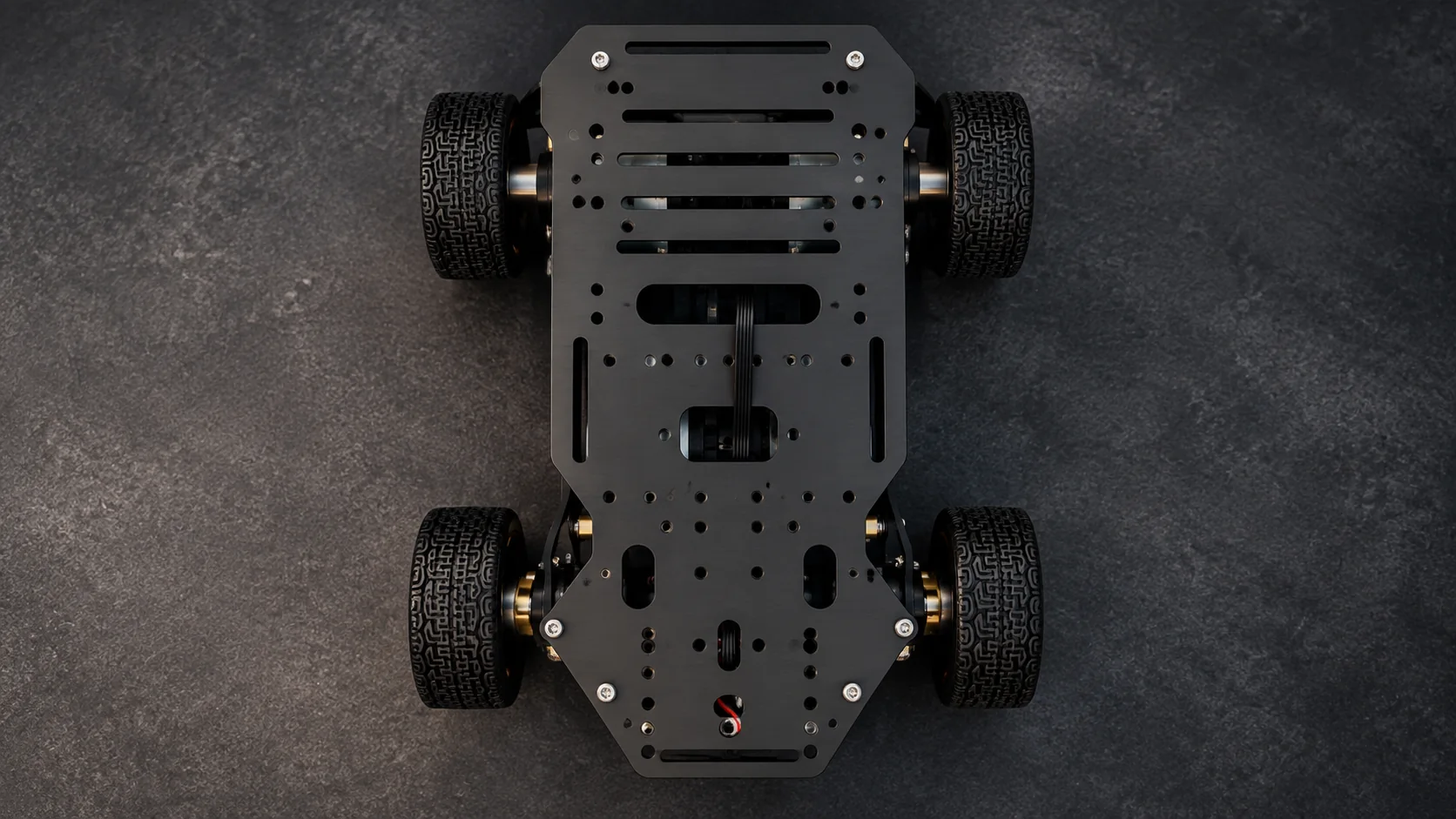
In use · vision input
ROS 2 · perception · autonomy
Deterministic low-level authority
Steering · motors · encoder feedback
Mapping and localization input
Built in layers
01Sense
02Understand
03Decide
04Execute